- The hard part is not finding Indian suppliers — it is telling real factories from traders dressed up as factories.
- B2B marketplaces and trade fairs are the fastest start; sourcing agents and going to the product cluster get you closer to the actual maker.
- Before you trust anyone: get the IEC code, a live video factory tour, and a paid sample.
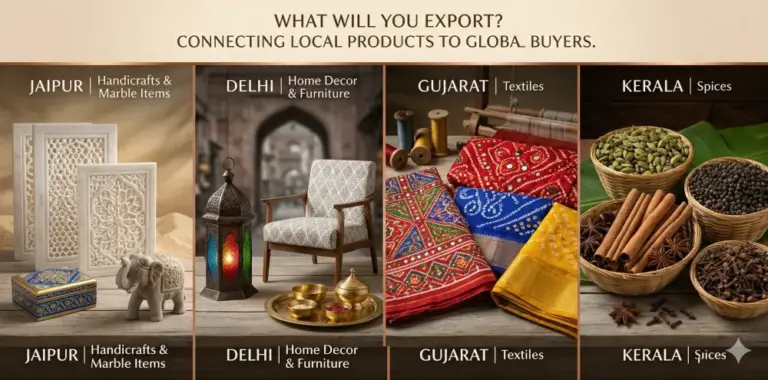
- Source near the product cluster (Moradabad brass, Tiruppur knitwear, Jaipur pottery) for better price and real expertise.
- A sourcing platform shortcuts the hunt by handing you pre-vetted factories.
Finding “a supplier” in India takes an afternoon on a marketplace. Finding a reliable manufacturer — one that actually makes what it sells, hits your spec, and ships on time — is the part that decides whether your import business works. The search is easy. The filtering is the skill.
This guide covers where US buyers find Indian manufacturers, how to spot the traders hiding among them, and the checks that separate a safe supplier from an expensive mistake.
Where do you actually find manufacturers in India?
Start with B2B marketplaces and trade fairs for breadth, then narrow toward the factory through sourcing agents or by going straight to the product’s cluster. Each channel trades convenience against how close it gets you to the real maker. Here is how they compare.
| Channel | Best for | Watch out for |
|---|---|---|
| B2B marketplaces (IndiaMART, TradeIndia) | Fast, huge selection, quick quotes | Many listings are traders, not factories |
| Trade fairs (IHGF Delhi, India Expo) | Seeing product quality and meeting makers in person | Travel cost and timing |
| Sourcing agents / platforms | Vetting and samples handled for you | Fees or commission; pick an honest one |
| Industry clusters (go to the source) | Best price and deepest expertise | Needs local navigation and language help |
| Export promotion councils (EPCH, Spices Board) | Directories of registered, verified exporters | Narrower, category-specific |
Factory or trader: how do you tell them apart?
A trader buys from a factory and resells to you at a markup. That is fine if you know it, costly if you do not. A real manufacturer proves itself without fuss: it will show you the production floor on a video call, share process photos with its own machinery and workers, and talk in detail about materials and capacity. Traders dodge the factory tour, send only polished stock images, and get vague when you ask about raw materials or lead times. When the address on the quote, the IEC registration, and the bank account do not all match, you are usually talking to a middleman.
What should you check before you trust a supplier?
Run every shortlisted supplier through the same short list before you send money.
- Confirm the IEC (Import Export Code) and GST number, and that the names match.
- Do a live video tour of the production floor.
- Order paid samples from the exact line that will run your order.
- Check the bank account is in the company’s name, never a personal account.
- Ask for two buyer references, ideally in your market.
Our full walkthrough on verifying an Indian supplier goes deeper on each check.
Should you use a sourcing agent?
A good agent earns their fee by finding real factories, handling samples and quality checks, and bridging language and distance. The risk is an agent who quietly marks up prices or steers you to whoever pays them the best kickback. If you use one, agree their fee openly up front, ask whether they are paid by you or by the supplier, and keep direct contact with the factory. A sourcing platform like SourceVeda does the vetting without the hidden-commission problem, because the manufacturers are pre-verified and you see them directly.
Go to the cluster
Indian manufacturing is organised by cluster, and sourcing near the right one gets you better pricing and genuine expertise. A few to know: Moradabad for brass, Tiruppur for cotton knitwear, Jaipur for blue pottery and gemstones, Saharanpur for wood carving, Panipat for recycled textiles, Firozabad for glass, and Agra and Kanpur for leather. Matching your product to its home cluster means dealing with people who have made it for decades.
Frequently asked questions
How do I find manufacturers in India?
Start with B2B marketplaces (IndiaMART, TradeIndia) and trade fairs for breadth, then narrow toward real factories through a sourcing agent or by going to the product’s cluster. Always verify the IEC, do a video factory tour, and order samples before you commit.
How do I know if a supplier is a real factory or a trader?
A real factory will do a live video tour, share dated process photos with its own machinery, and have matching IEC, address, and bank details. Traders avoid the tour and keep details vague.
Is IndiaMART or Alibaba better for finding Indian suppliers?
IndiaMART is India-focused with more domestic manufacturers; Alibaba is broader but heavy on traders. Both are starting points, not verification — treat any listing as unproven until you have done your own checks.
Do I need to visit India to find a manufacturer?
No. Most buyers vet suppliers remotely with video tours, samples, and third-party inspections, or use a sourcing agent or platform. A visit helps for large or complex programs but is not required to start.
What is a sourcing cluster?
A cluster is a region that specialises in one product, such as Moradabad for brass or Tiruppur for knitwear. Sourcing from the right cluster usually means better pricing and deeper manufacturing expertise.
Red flags while you are searching
Some warnings show up before you ever place an order. Be wary of a “manufacturer” that only sends stock catalogue images, dodges a video call, quotes a price far below everyone else, or asks for payment to a personal account. A company email on a free domain with no website or footprint is another flag. None of these proves a scam on its own, but two or three together mean slow down and verify before you commit a cent.
Why a marketplace listing is not enough on its own
Marketplaces are a directory, not a guarantee. A “verified” badge usually means the platform checked a business licence, not that the company makes what it lists, hits export quality, or ships on time. Treat every listing as a lead to investigate, never a supplier you can trust yet. The real work — the video tour, the sample, the reference call — happens off the platform, and it is what actually protects your order.
How many suppliers should you shortlist?
Aim for three to five real candidates per product before you sample. Fewer than that and you have no leverage or comparison; many more and you spread your time too thin to vet any of them properly. Get quotes and samples from your top two or three, compare quality against price rather than price alone, and keep a backup supplier warm even after you choose. Single-sourcing a brand-new product is how a late or failed order becomes a crisis.
Find the maker, not just a seller
The goal is never just a supplier — it is the factory behind it. Use the marketplaces to build a shortlist, verify hard, and source near the cluster that owns your product. If you would rather skip straight to vetted manufacturers, browse verified Indian suppliers by product or tell us what you need and we will match you within 48 hours.
Written by the SourceVeda Team, sourcing specialists connecting US buyers with verified Indian manufacturers. Last updated: November 2026.